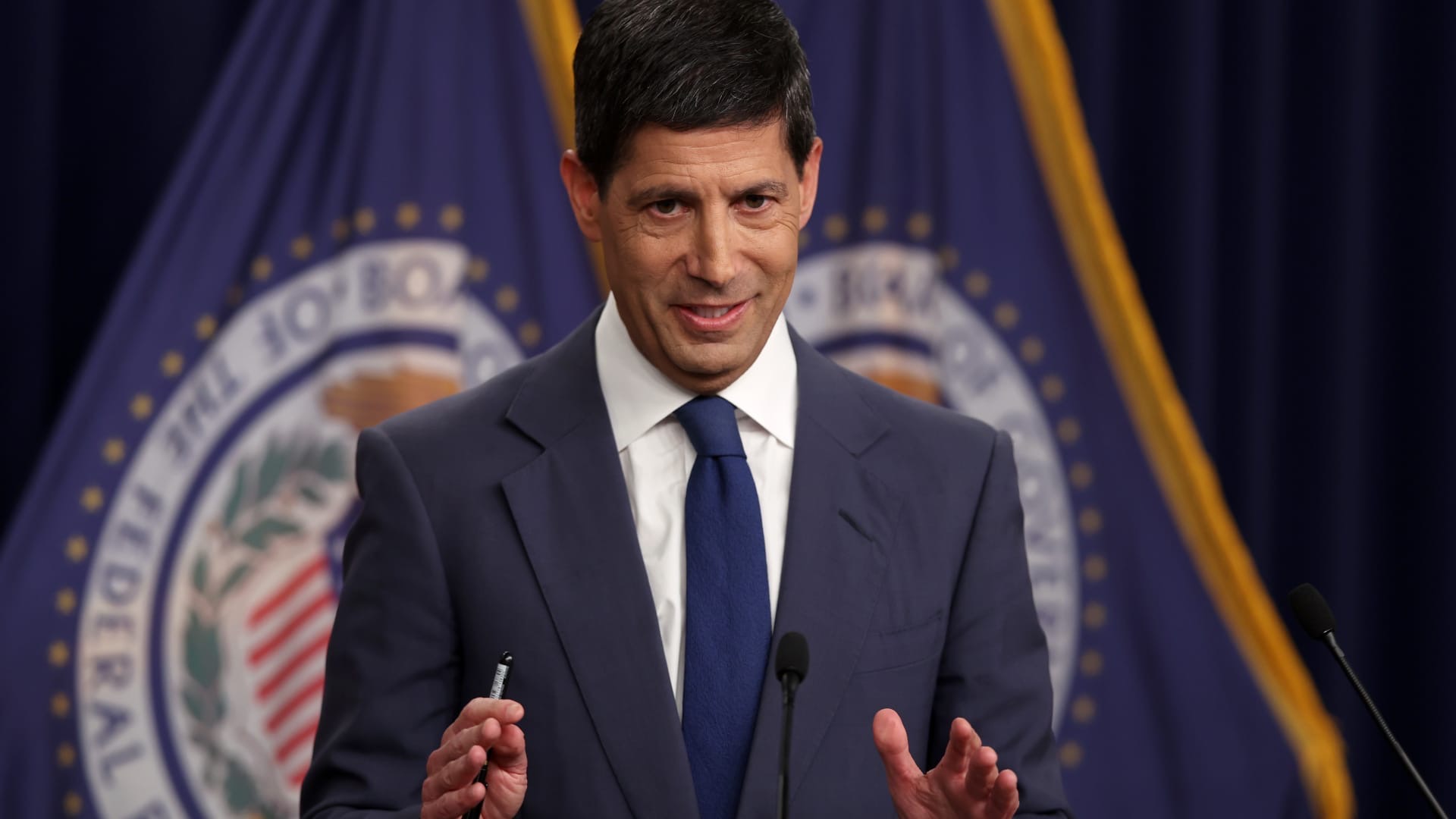
Driving the news: Fed Chairman Kevin Warsh delivers his keynote at the Jackson Hole symposium Friday. The annual Wyoming gathering is titled 'Financial Innovation: Implications for Payments and Policy.' Markets are watching every word — or the absence of them.
Why it matters: Warsh has governed by deliberate opacity since taking the reins in May. He lets markets read data and send signals back to the Fed. That approach has generated mixed reviews. Now, with Treasury yields rising, the stakes are unusually high.
By the numbers: Bank of America's Mark Cabana warns that a vague, structurally focused speech could trigger a sell-off in long-dated Treasurys. The 30-year yield could hit 5.5% or higher. That would be a level not seen since at least the early 2000s.
Between the lines: Treasury Secretary Scott Bessent complicated Warsh's position last week. The Treasury announced it will at least double the size of its debt buyback operations — from $2 billion per weekly operation — starting Sept. 9. RSM chief economist Joseph Brusuelas put it plainly: 'Actions by the Treasury have undermined Warsh's move.'
Warsh has also declined to spell out his 'reaction function' — the conditions that would trigger a rate move. That silence is no longer cost-free.
The bottom line: Warsh built his brand on letting markets do the talking. Markets are now talking back — loudly. A free-market Fed is a sound principle. But a Fed that won't explain its own rules isn't disciplined. It's just unpredictable. Friday is the moment to fix that.